(385) 206-5456
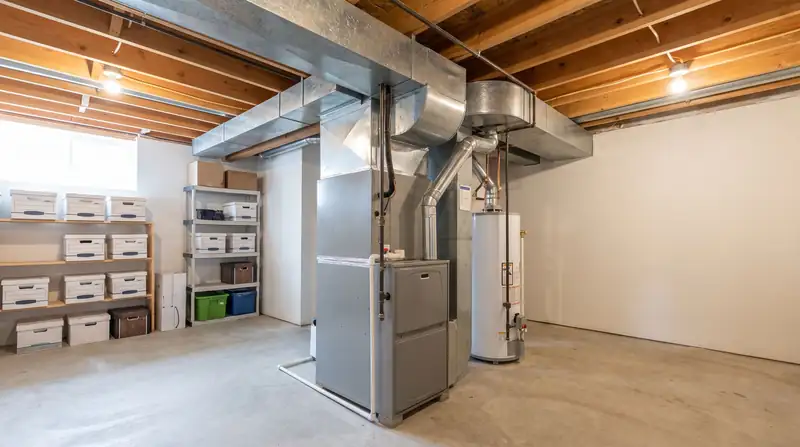
Furnace Repair in Salt Lake City, UT: gas furnace and ductwork in a basement mechanical room

Furnace Repair in Salt Lake City, UT

Expert Furnace Repair by Experienced Technicians

From cracked igniters to fouled flame sensors and worn blower motors, we find the real fault and fix it right the first time.

Ask About Our Pricing

Stocked Service Trucks All Brands Serviced
Call (385) 206-5456
Taking calls now. Wait time: 0–2 minutes
★★★★★ 4.8 / 5 stars (150+ reviews)
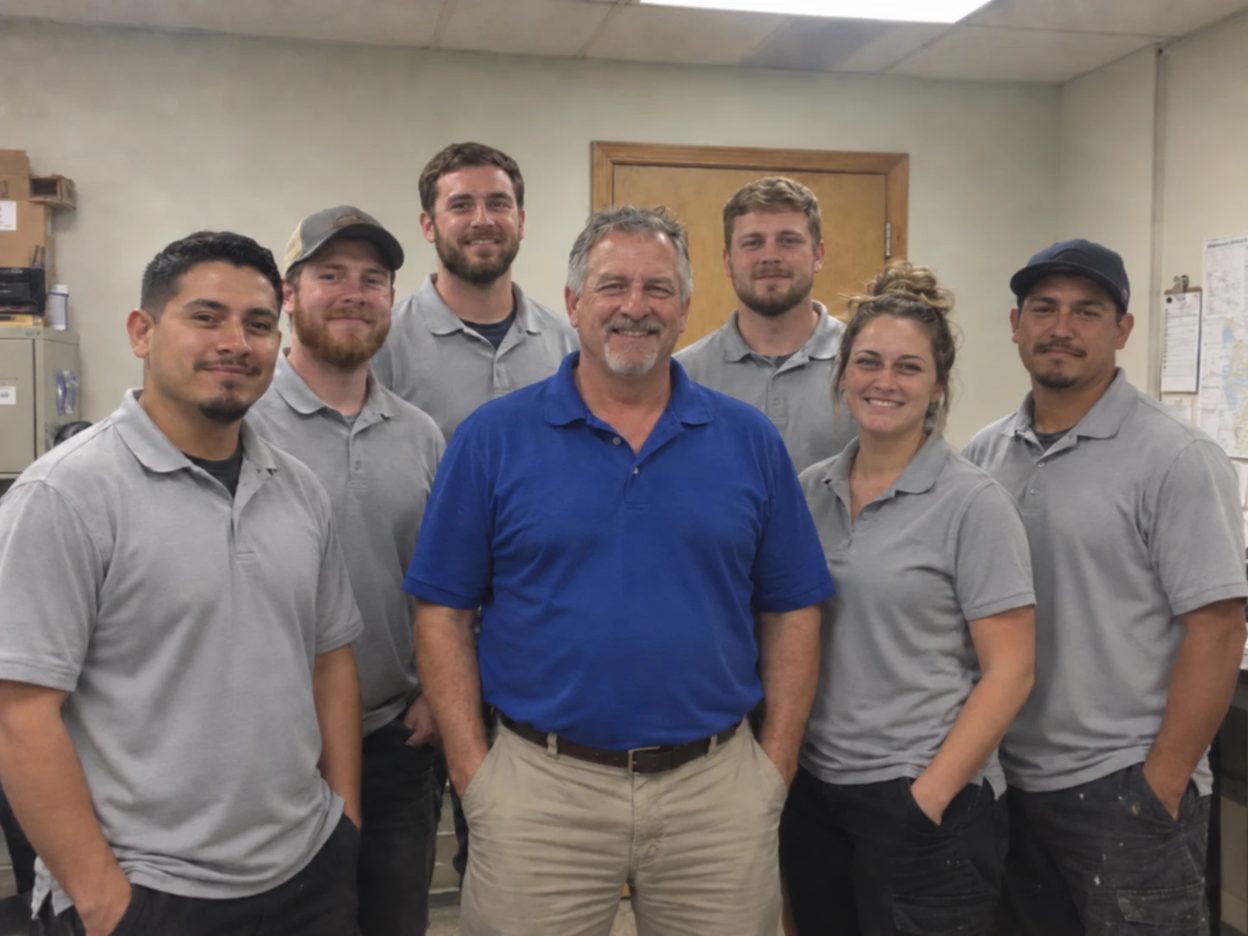
Our technicians who handle Furnace Repair in Salt Lake City, UT

Trusted Local Experts in Salt Lake City

Time matters when the AC is down or the heat is out. Salt Lake City HVAC provides Salt Lake City homes and businesses with fast, thorough service backed by experienced technicians and fully stocked service vehicles.

1,200+Systems Serviced
Same-DayAppointments
ClearPricing

From the hallway, a furnace that will not heat looks the same no matter what broke. Inside the cabinet, though, the sequence is strict: inducer on, pressure switch closed, igniter glowing, gas valve open, burners lit, flame proven, and finally the blower moving heat through the ducts. Most of the diagnosis comes down to finding the broken link. In Salt Lake City homes, it tends to be the same handful of culprits: a flame sensor coated in oxide, a hot surface igniter cracked by thermal cycling, a pressure switch held open by a tired inducer or a plugged condensate trap, or a control board with a burned relay.

Quick ResponseCalls answered by real people
Price Before WorkNo pressure, no upsells
All Major BrandsExperienced, local technicians

For air conditioning breakdowns, see AC Repair.

Signs You Need Furnace Repair in Salt Lake City

Recognizing the warning signs early can save you time and money. Keep an eye out for the following clues:

  • The blower runs constantly but the air never warms
  • Yellow, wavering burner flames where they should be sharp blue
  • Squealing or grinding from the blower compartment
  • Soot, rust, or moisture near the furnace cabinet or vent pipe
  • Flames that start, last a few seconds, and go out again and again
  • The igniter glows and clicks, yet no flame ever appears
  • A bang or boom when the burners ignite late
  • A furnace that shuts off every few minutes before the house warms up

Early Action Saves Money

A failing capacitor, clogged condensate drain, or dirty flame sensor rarely fixes itself and usually gets more expensive to address the longer it runs. Call (385) 206-5456 at the first sign of trouble.
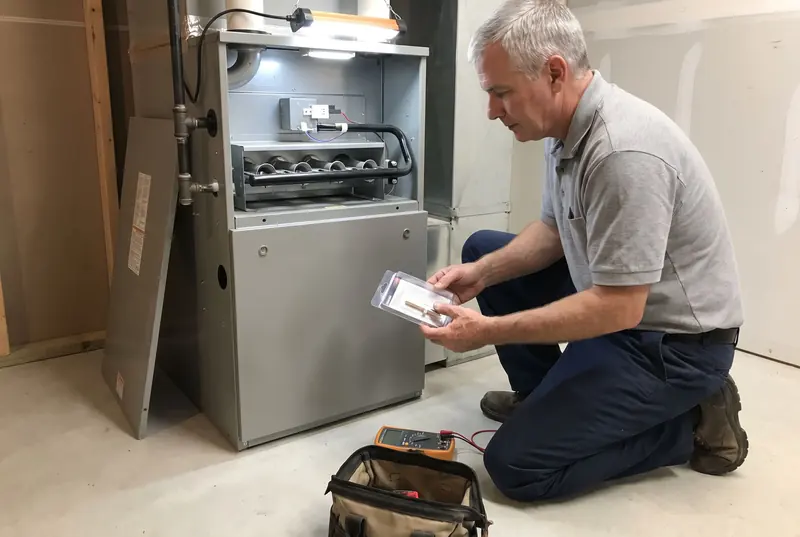
Gas furnace with the burner panel off and a new igniter ready in Salt Lake City, UT
A failed igniter or a dirty flame sensor is behind many no-heat calls, and both are usually same-visit fixes.

Furnace Repair, Done Properly

Our experienced technicians diagnose a furnace the way it operates, in order, measuring each stage as it happens. That means igniter resistance, microamp flame signal, pressure switch operation under actual inducer draft, gas valve voltage, and blower and capacitor condition. The safety checks come standard on a gas appliance: heat exchanger inspection, leak testing on the gas connections, and flue draft verification, since a hazard rarely shows itself at the thermostat. We finish by checking temperature rise against the data plate, making sure the burner and blower work together the way the manufacturer designed them to.

We work on gas, propane, and electric models from every major brand, both conventional 80 percent units and condensing high-efficiency models with their traps, drains, and dual pressure switches. The truck stock covers the parts that actually fail: igniters, flame sensors, pressure switches, capacitors, inducer assemblies, and blower motors, so most no-heat calls end with heat the same visit. For furnace repair anywhere in Salt Lake City, call (385) 206-5456 and an experienced technician will be headed your way today.

How Much Does Furnace Repair Cost in Salt Lake City?

For most Salt Lake City homes, a furnace repair runs $150 to $600. Cleaning a flame sensor is a small job; replacing a blower motor or control board is a bigger one. Every furnace repair starts with a real diagnosis and a clear price.

Factors That Change the Price

  • The age and efficiency of the furnace, since high-efficiency models use more specialized parts
  • A cracked heat exchanger, which is a safety issue and usually points to replacement
  • Timing, such as a no-heat call on a cold night versus a scheduled repair
  • How easy the furnace is to reach

When a repair gets expensive on an aging furnace, you'll see both options before deciding. Call (385) 206-5456 for a quote.

RepairTypical costWhat it usually means
Flame sensor cleaning or replacementBurners light but cut out almost immediately$80–$250Burners light but cut out almost immediately
Hot surface igniter replacementFurnace clicks and tries to start but never lights$150–$400Furnace clicks and tries to start but never lights
Draft inducer motorStartup fan fails, furnace won't fire$400–$1,000Startup fan fails, furnace won't fire
Blower motorBurners run but little or no air comes out of the vents$400–$1,500Burners run but little or no air comes out of the vents
Control boardFurnace won't respond to the thermostat$300–$700Furnace won't respond to the thermostat
Gas valve replacementValve fails to open, so the furnace never lights$250–$700Igniter glows but gas never flows to the burners

These are common price ranges, not quotes. We confirm the exact price after diagnosing your system.

Our Furnace Repair Process

Every visit follows a step-by-step method refined over years of hands-on experience.

1

Startup Sequence Testing

We watch the furnace's startup sequence and measure at every stage: inducer draft, pressure switch, igniter resistance, flame signal, and gas valve operation, to find exactly where it breaks.

2

Safety Verification

Safety is part of every repair: heat exchanger inspection, instrument leak testing on the gas side, and flue draft verification, because a furnace that runs is not the same as a furnace that runs safely.

3

Targeted Repair

Igniters, flame sensors, pressure switches, capacitors, and motors ride on the truck, so most furnaces are lit and heating again before we pack up.

4

Full Verification

We finish with a full-cycle test: temperature rise matched to the data plate, smooth ignition with no booming, and every limit switch and safety control confirmed working.

Furnace Repair Issues? We Can Help.

Open now. Estimated wait: 0–2 minutes

Call (385) 206-5456 Now

Frequently Asked Questions About Furnace Repair

Still not sure? A quick call gets you a straight answer.

Call (385) 206-5456
If the igniter never glows, suspect a cracked hot surface igniter or a board not sending it power. If it glows but no flame appears, the gas valve or its control circuit is the likely fault. If nothing happens after the click, the pressure switch may not be closing because of a weak inducer or blocked flue. We test the whole sequence. Call (385) 206-5456 for a diagnosis.
Roughly fifteen to twenty years is typical for a well-maintained gas furnace, and electric furnaces frequently last longer. What decides where yours lands is maintenance: clean filters and annual service. When an older furnace faces a big repair, you get an honest read from us on whether it is worth fixing. Call (385) 206-5456 in Salt Lake City for straight answers.
The flame sensor is the usual suspect. When it is coated with oxide, the control board cannot confirm the burners are lit and shuts off the gas within seconds, locking out after three tries. A quick cleaning may get you through the night, but repeated fouling points to a deeper cause. Call (385) 206-5456 and we will fix the cause in Salt Lake City.
It deserves prompt attention. Booming at light-off means gas is accumulating before it ignites, usually from dirty burners or a weak igniter, and each hard light-off stresses the heat exchanger, the one part you never want to crack. It is a straightforward fix caught early. Call (385) 206-5456 before it becomes an expensive one.

The Benefits of Professional Furnace Repair

Gas, open flame, high voltage, and a flue share one cabinet in a furnace, and the most dangerous failure is the one you cannot see: a damaged heat exchanger that lets combustion gases into the air the blower sends through your home. Every morning that delayed ignition keeps booming at startup, that exchanger takes more stress. The diagnostic side has its own pitfalls. When a furnace trips its high limit, the switch itself may be bad, or the furnace may be protecting itself from a clogged filter or a failing blower. Replacing the switch when the real issue is airflow removes a safety device and leaves the actual problem in place.

At Salt Lake City HVAC, no symptom gets treated in isolation. A meter tells us the flame signal, so we never condemn a good sensor while the real culprit, a cracked igniter or a weak gas valve, stays in place. We confirm draft at both the pressure switch and the flue, measure temperature rise against the data plate to catch airflow problems early, and leak-test every gas connection with instruments, not a guess. When we are done, the furnace has proven itself safe and correct through a full cycle, and if it is nearing the end of its useful life, we tell you honestly.

Should You DIY or Call a Pro?

Simple checks are fine to DIY, but most heating and cooling repairs need professional tools, training, and experience.

FactorDIY AttemptProfessional Service
Heat Exchanger No way to see a crack from outside Examined as standard on each call
Ignition Faults New igniter installed on a hunch Each ignition component tested
Gas Safety Small leaks missed entirely Connections leak-tested with instruments
High-Limit Trips Safety switch bypassed or swapped Filter, blower, and ducts checked for the cause
Airflow Match Fan speed never checked Blower tuned to the rated rise
Verification Declared fixed after one flame Full cycles proven clean and safe
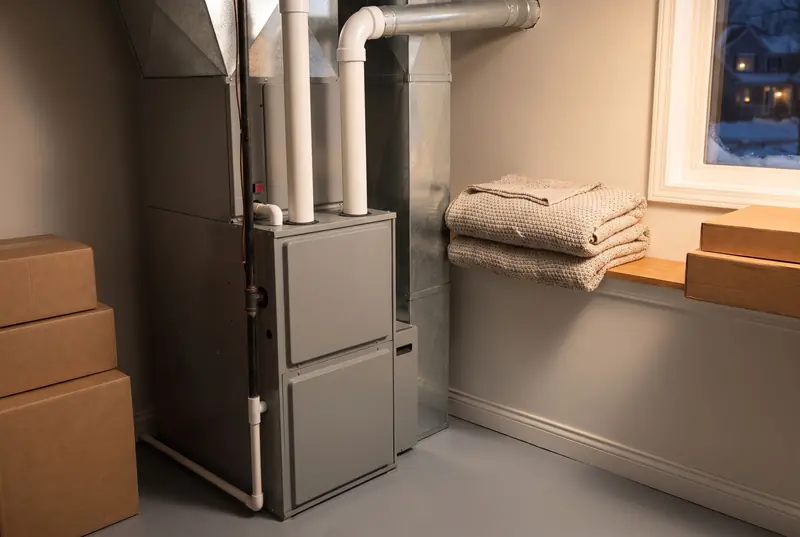
Clean furnace installation in a basement in Salt Lake City

Furnace Repair Prevention Tips

A few simple habits now, like regular filter changes and seasonal tune-ups, can add years to your system's life. Start with these practical measures our team relies on:

  • Keep storage, lint, and especially chlorine-based products away from the furnace closet
  • Give the furnace room to breathe, since a crowded utility space starves the burners of air
  • Test your CO detectors monthly and make sure each floor has one
  • Listen at light-off; clean ignition is quiet, and booming means the burners need service
  • Keep the condensate trap and drain clear on high-efficiency units to prevent lockouts
  • Schedule service each fall to catch worn igniters and dirty sensors before cold weather arrives
  • Replace the filter every month while the furnace is working hard, since it costs less than any other part

Schedule Your Furnace Repair Service

The sooner you call, the sooner your comfort is back.

Call (385) 206-5456 Today

Our Commitment to Salt Lake City Residents

Our name is built on dependable furnace repair service, straight pricing, and treating every home with care.

Code-Compliant Work

HVAC systems combine gas, refrigerant, and high-voltage electricity. Our technicians follow code on every connection, from gas lines to disconnects, and test everything before we leave.

Rooted in Salt Lake City

We're your neighbors, not a faraway call center. You'll deal with the same familiar faces every visit.

No Surprises, No Pressure

We tell you exactly what you need and what it costs up front. No surprise charges and no selling you services you don't need.

We Fix the Root Cause

We don't just swap parts and leave. Every furnace repair job starts with why the system failed, restricted airflow, a weak capacitor, a clogged drain, so we fix the cause and the problem stays fixed.

★★★★★ Rated 4.9/5 by Salt Lake City homeowners  ·  Upfront Pricing  ·  Fast Response  ·  All Brands Serviced

Book Furnace Repair Service Now

Don't wait for a small fault to take out the whole system. Call Salt Lake City HVAC for fast, reliable service.

Call (385) 206-5456 Now
HVAC Problem? Get Help NowExperienced Technicians Standing By